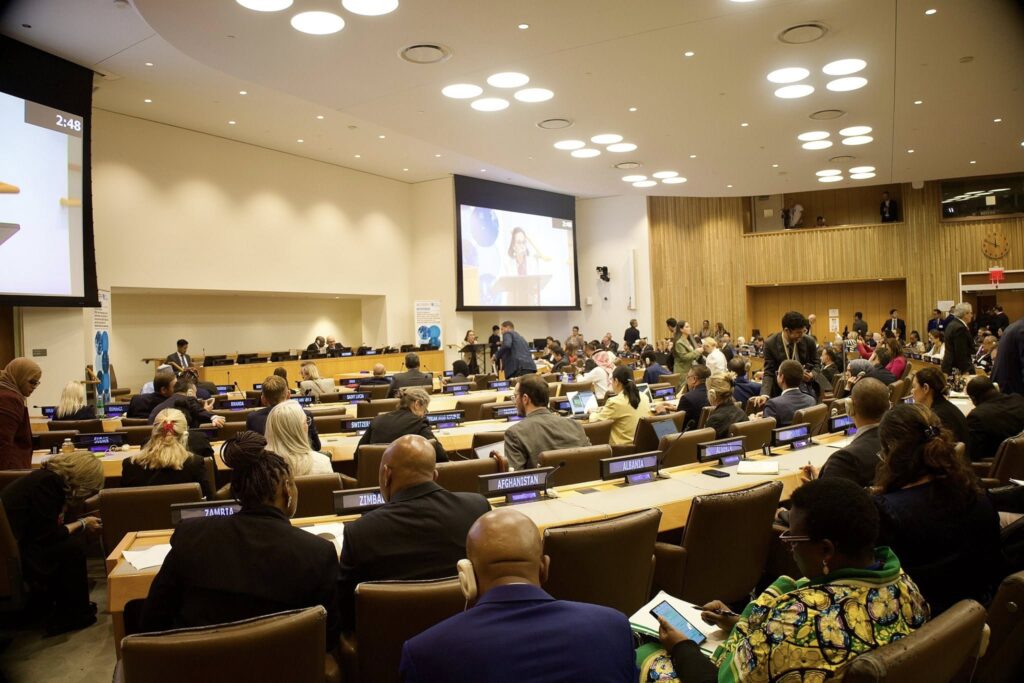
NEW YORK, USA – September 25, 2025 – Heads of State and Government gathered at the United Nations Headquarters in New York for the Fourth High-level Meeting of the UN General Assembly on the Prevention and Control of Noncommunicable Diseases (NCDs) and the Promotion of Mental Health and Well-being (HLM4). At this critical gathering, leaders set a new vision for reducing the burden of NCDs and advancing mental health towards 2030 and beyond, through the development of an ambitious and achievable Political Declaration.
H.E. President Hilda C. Heine delivered a statement during the meeting, underscoring the devastating impact of NCDs on Pacific Island nations and noting that nearly three out of four deaths in the Marshall Islands are linked to NCDs. President Heine emphasized the urgent need for global action to prioritize people’s health over profit, strengthen resilient community health systems, and ensure sustained support for surveillance and accountability.
President Heine also highlighted the challenges of rising obesity, diabetes, and hypertension in the Marshall Islands, which are compounded by reliance on imported processed foods and limited access to mental health services. She stressed that restoring access to traditional, local foods not only improves health outcomes but also strengthens cultural resilience and social identity. President Heine also drew attention to the intersection of NCDs, mental health, and broader sustainable development challenges, including climate resilience and the nuclear legacy that continues to affect the Marshallese people. She called for justice, equity, and solidarity in addressing these issues, urging partners to support “island-tailored” public health strategies that directly engage communities.
President Heine’s remarks highlighted that tackling NCDs and mental health requires more than treatment — it demands justice, equity, and solidarity. For the Marshall Islands, this means addressing the long-term impacts of its nuclear legacy, reducing dependence on imported processed foods, and reclaiming traditional practices that strengthen both health and cultural identity.