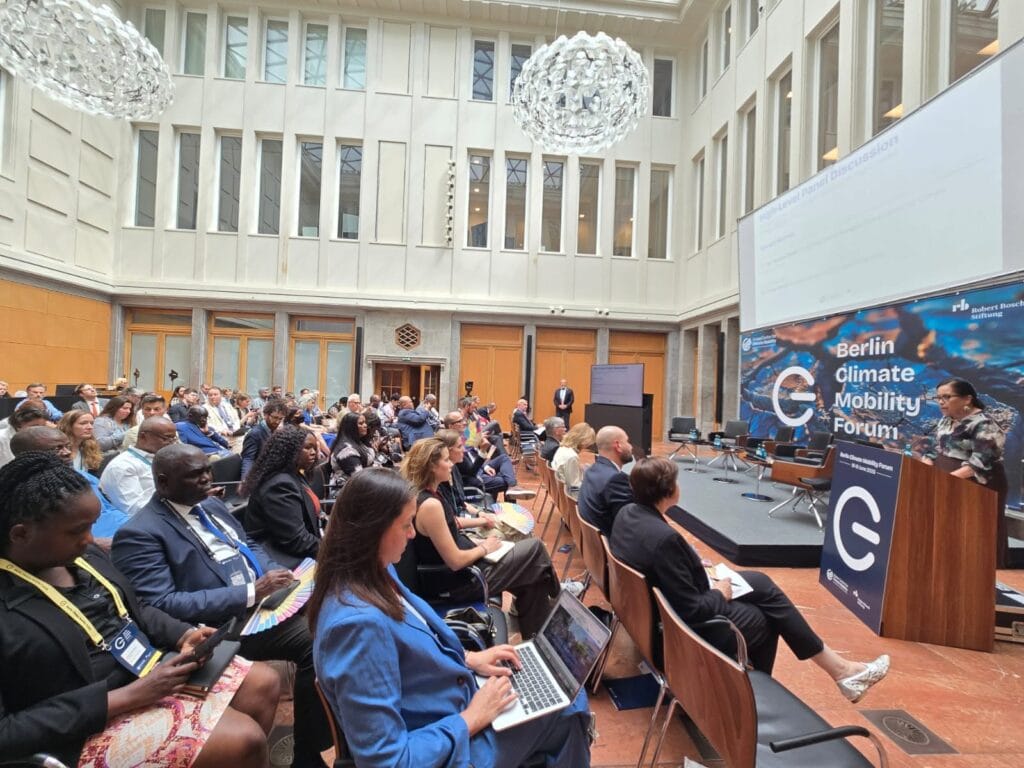
BERLIN, GERMANY — June 19, 2026 — Her Excellency President Hilda C. Heine delivered keynote remarks at the Berlin Climate Mobility Forum 2026 during High-Level Panel 5, “Translating International Legal Opinions into Rights-Based Climate Mobility Policies,” where she highlighted the importance of advancing rights-based climate mobility solutions that uphold human dignity, protect sovereign rights, and support the long-term resilience of climate-vulnerable nations.
Addressing government leaders, legal experts, international organizations, and civil society representatives, President Heine highlighted the profound impacts of climate change on communities across the Pacific. She noted that rising sea levels and other climate-related threats are already affecting livelihoods, cultural heritage, human security, and the enduring connection between peoples and their ancestral lands.
President Heine emphasized that climate change must be addressed not only as an environmental challenge, but also as an issue of human rights, dignity, and shared international responsibility. She underscored the importance of ensuring that climate mobility policies are informed by the experiences and priorities of affected communities and are designed to protect cultural identity, maintain social ties, and uphold the right of people to shape their own future.
President Heine reaffirmed the Republic of the Marshall Islands’ position that climate-induced sea-level rise does not diminish the country’s statehood, sovereignty, or maritime rights, emphasizing the importance of legal certainty and the continued recognition of maritime zones established under international law, including UNCLOS. Her Excellency highlighted the role of evolving international legal frameworks in supporting Small Island Developing States and the need to translate legal principles into practical action that strengthens climate resilience, sustainable development, and long-term planning.
On climate mobility, President Heine emphasized that responses to climate impacts must uphold the dignity, rights, and choices of affected communities, noting that migration should not be an imposed adaptation measure. She reaffirmed the Marshall Islands’ commitment to ensuring its people can continue to live, thrive, and preserve their culture and way of life in their homeland, while highlighting the importance of international cooperation, climate finance, and sustained support for vulnerable countries.