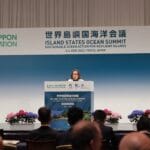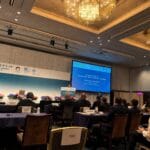
TOKYO, JAPAN – June 3, 2026 — Her Excellency President Hilda C. Heine participated in the Sea Level Rise and International Law session at the Island States Ocean Summit, where she underscored the urgent need to protect the rights, sovereignty, and future of vulnerable island nations in the face of climate change.
Hosted by Japan’s Ministry of Foreign Affairs, the session brought together heads of state, government officials, legal experts, and international partners to discuss the legal implications of sea-level rise. In her intervention, President Heine emphasized that for the Marshall Islands and other Pacific nations, rising seas threaten not only the environment, but also sovereignty, identity, culture, livelihoods, and the ability of future generations to remain connected to their ancestral homelands.
President Heine reaffirmed the Marshall Islands’ position that maritime zones established under the United Nations Convention on the Law of the Sea (UNCLOS) should remain secure despite the impacts of climate change and welcomed growing international recognition of this principle. She stressed that protecting statehood and maritime rights is essential for preserving legal certainty, sovereign rights, and the future of island communities.
At the same time, President Heine underscored that legal protections alone are not enough. Addressing the impacts of sea-level rise requires urgent global action to reduce greenhouse gas emissions, accelerate the transition to clean energy, and deliver the financial resources needed to strengthen climate resilience in vulnerable nations.
As a nation on the frontlines of climate change, the Republic of the Marshall Islands continues to advocate for a rules-based international order that protects the rights of vulnerable states while advancing meaningful action on climate change and sea-level rise. President Heine reaffirmed the Marshall Islands’ commitment to working with the international community to uphold UNCLOS, strengthen legal stability, and ensure that no nation loses its sovereignty, identity, or future because of a crisis it did little to create.